
Back-to-Wall, Wall-Hung or Close-Coupled Toilet: Which Should You Choose?
There are three main toilet styles in a modern bathroom, and they look and behave differently. Here is how each one works, what it needs behind the wall and which suits a small room, a family home or a quick replacement.
The three styles in plain terms
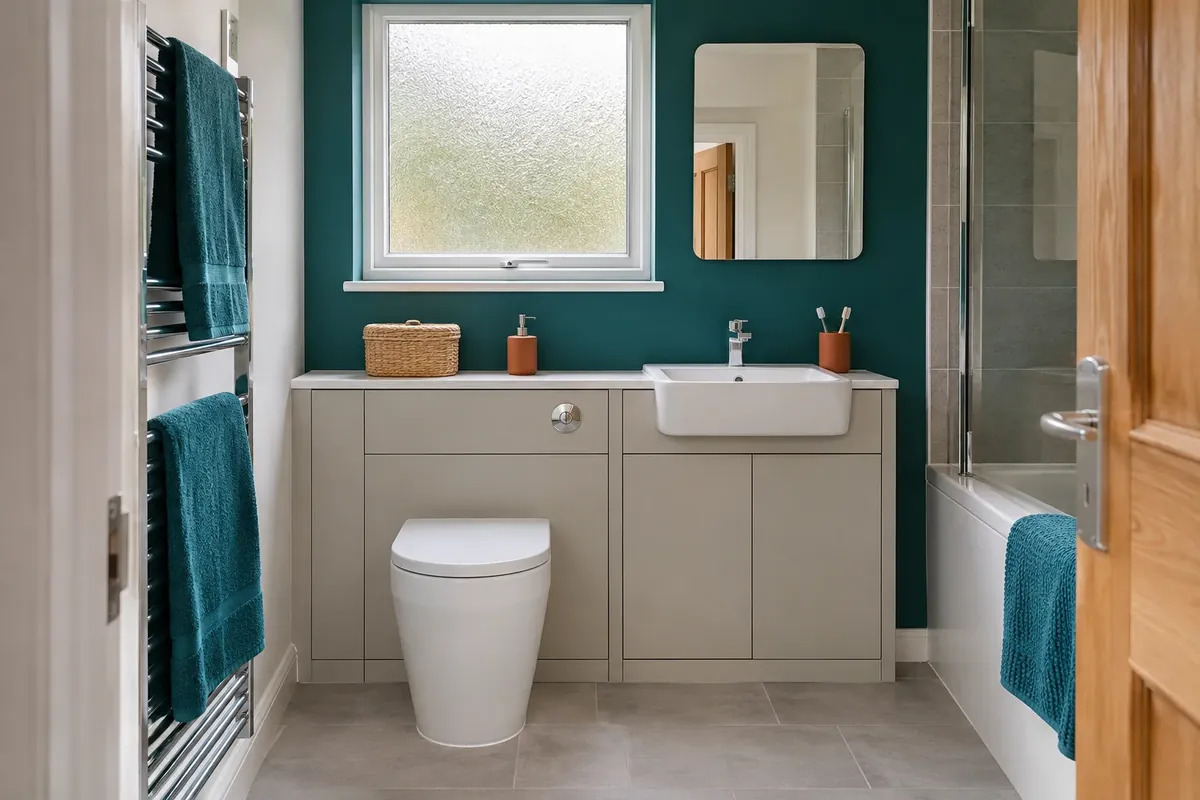
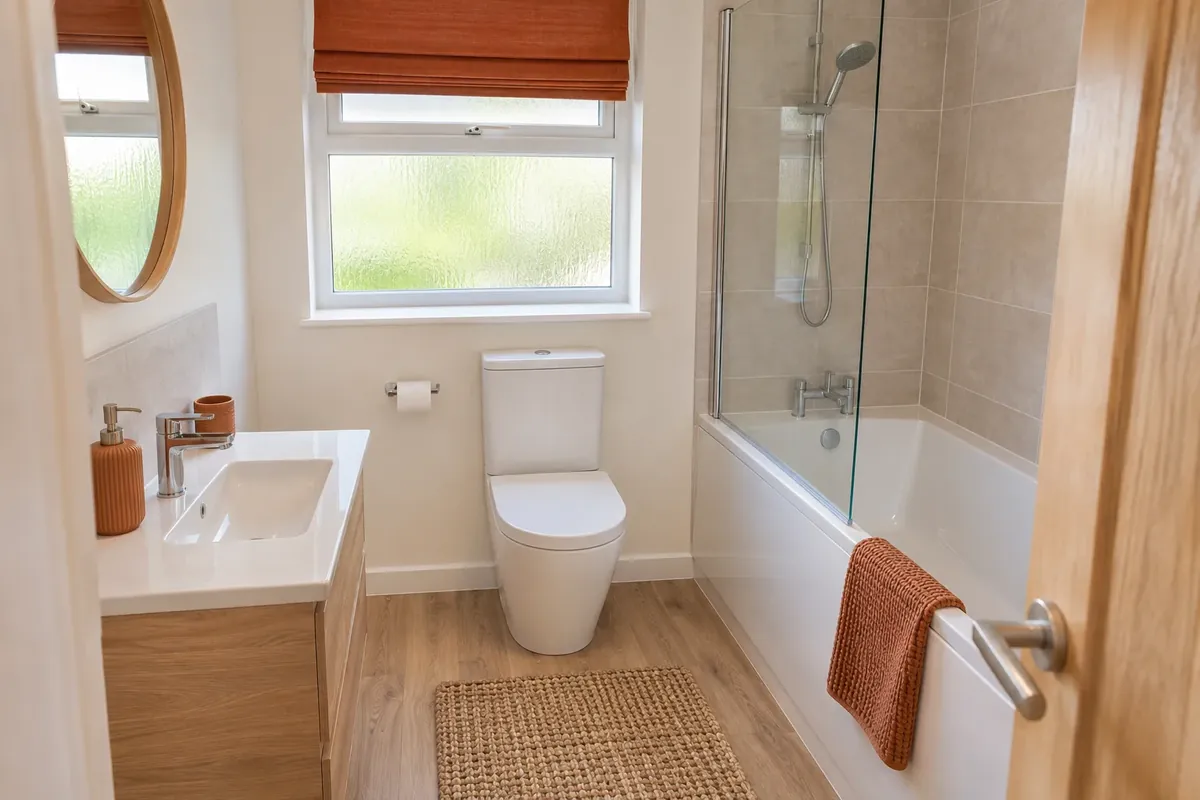
The close-coupled toilet is the familiar one, with the cistern perched on the pan and the whole thing standing on the floor. A back-to-wall toilet also stands on the floor, but the pan sits flat against the wall and the cistern is hidden inside a unit or behind a panel.
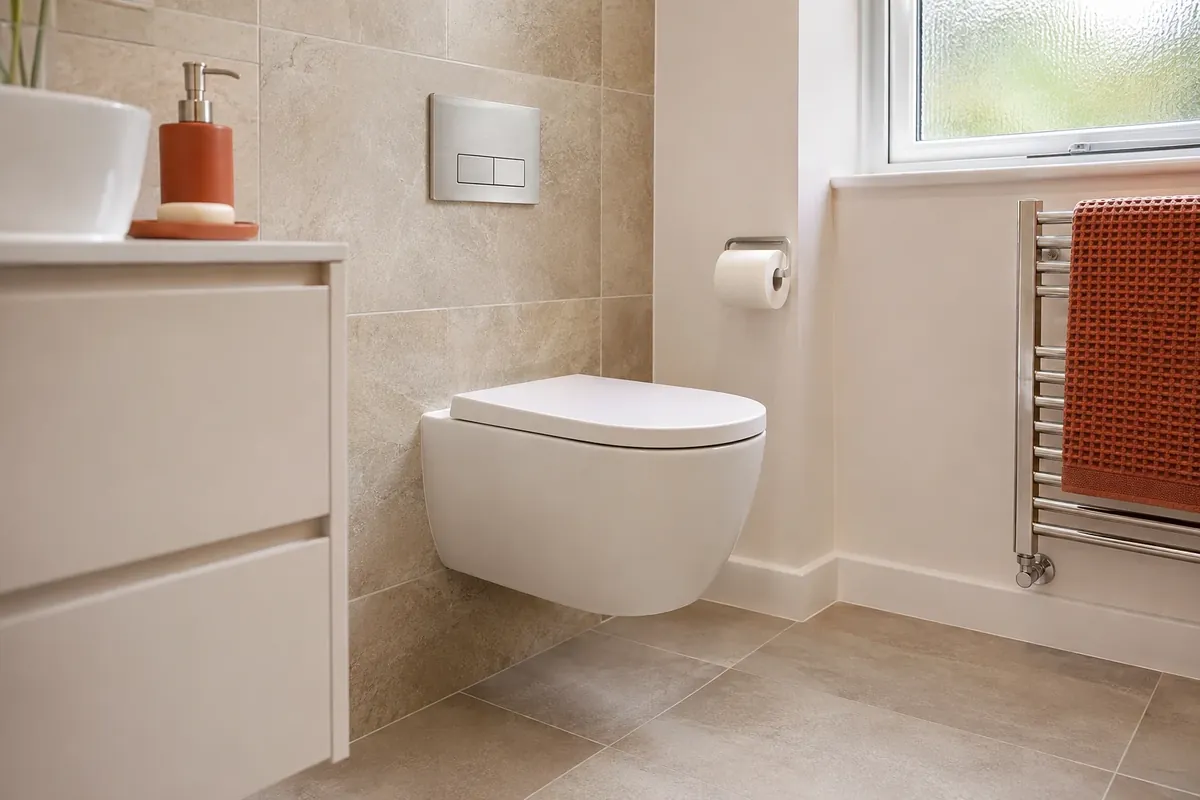
A wall-hung toilet has no floor contact at all. The pan is bolted to a frame built into the wall, and the cistern sits inside the frame. A flush plate on the wall is the only part you see. If you are planning a modern bathroom, you will meet all three choices early in the design.
Close-coupled: simple and easy to repair
This is the simplest style to fit. It needs nothing built into the wall and little change to the pipes. If you only want to replace a worn toilet, a close-coupled one is often the quickest swap.
Repairs are easy too, because you can lift the cistern lid and reach the working parts. The downsides are looks and cleaning. The gap between cistern and pan and the base around the floor collect dust, and the whole shape sticks out into the room.
- Simple to fit and easy to repair.
- Usually the lowest price of the three.
- More ceramic and more joints to clean.
- Takes more floor than the other two.
Back-to-wall: tidy lines without a frame
A back-to-wall toilet hides the cistern in a fitted unit or behind a panel. This gives a flat shelf above the toilet and a clean line along the wall. Because the pan sits flat to the wall, there is no gap behind it to clean.
It is a good middle option. The pan stays on the floor, so it is strong, and the unit hides the pipes. Plan access to the cistern, because a concealed cistern needs a way in for repairs, usually via the flush plate or a panel that lifts away. Our fitted bathroom furniture shows how the unit can match the basin and tall cupboard.
Wall-hung: the cleanest floor
With a wall-hung pan the floor runs clear beneath, so you can mop straight across. It also lets you set the height. Many people choose a comfort height for easier sitting and standing, which helps anyone with stiff knees.
The trade-off is the work behind the wall. A frame must be fixed to the floor or the wall, and the wall must be built out to hide it. In a small room that means losing a few centimetres of depth. In a tenement, a solid wall may need to be built out. The flush plate also needs a way in to the cistern for repairs.
Comparing the three
Use this table as a quick guide.
| Close-coupled | Back-to-wall | Wall-hung | |
|---|---|---|---|
| Fitting work | Least | Medium | Most |
| Cleaning | More joints | Flat to the wall | Clear floor beneath |
| Repairs | Easy to reach | Via a panel that lifts away | Via the flush plate |
| Best for | Quick replacement | Tidy lines on a budget | Small rooms and easy mopping |
Which suits your home
For a quick swap in a rented flat or a bathroom you plan to keep, close-coupled is sensible. For a family bathroom where you want clean lines and hidden pipes, back-to-wall is the best balance. For a small room where you want the floor to feel bigger, or an older owner who wants a set seat height, wall-hung is worth the extra work.
Think about your walls. In an older stone home in Aberdeen or Stirling, the wall may be thick and solid, so a frame is built out from it. A thin stud wall in a newer home must be reinforced before it carries a wall-hung pan.
Fitted bathrooms start from £3,995, with the final figure depending on your room and choices. Mention the toilet style you like when you get in touch.
What to check before you buy
Measure the room before you choose. Pan depth varies, and a long pan in a small bathroom can leave little room to stand at the basin. Check how far the pan sticks out from the wall and make sure the door can still open.
Look at the flush. Dual flush plates save water, and large flush buttons are easier to press. Soft-close seats stop slamming. Finally, check the waste. A toilet that does not line up with the existing waste can need pipework changes, and that can add to the work.
Common questions
Can a wall-hung toilet carry a normal adult?
Yes, when the frame is fitted properly to the floor or wall. The frame is the key part, so a qualified installer should fit it.
Can I swap a close-coupled toilet for a wall-hung one?
Yes, but it is a bigger job. The wall needs a frame, the waste moves to the wall and the floor and wall are made good. It is easiest during a full refit.
How do I get at a hidden cistern if it leaks?
Hidden cisterns have an access point, usually behind the flush plate or a removable panel. Ask where it is before you choose the toilet, and keep that space clear.
Is a back-to-wall toilet harder to fit than a close-coupled one?
It needs a unit or a panel to hide the cistern, so there is more work. The work is less than a wall-hung toilet because no frame is needed in the wall.
Bathroom fitters near you
We fit bathrooms in these towns. Pick yours to see what we do locally.