
Bathroom Lighting Zones and IP Ratings Explained
Water and electricity do not mix, so the wiring rules divide a bathroom into zones and set a minimum IP rating for each. This guide explains the zones in plain terms, what the ratings mean and what to ask your electrician before you buy a light.
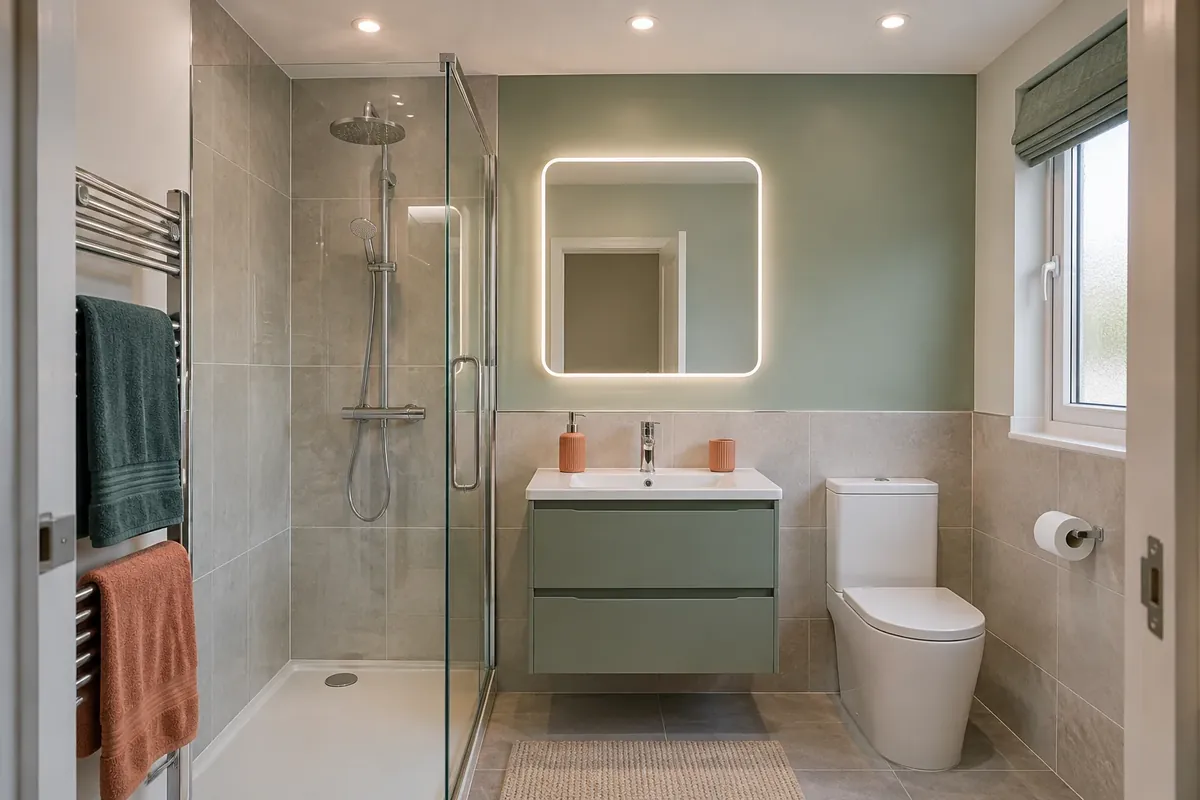
Why bathrooms have zones
The wiring rules for the UK are in BS 7671, and the part for bathrooms and showers is Section 701. It divides the room into zones, according to the chance of a fitting getting wet. The nearer a fitting is to the water, the tougher its protection must be.
In Scotland, the building standards guidance treats an electrical installation designed, built and tested to BS 7671 as meeting the safety standard. That is why a qualified electrician should plan and certify the lighting in your bathroom. You can see what a full job involves on our bathroom installation page.
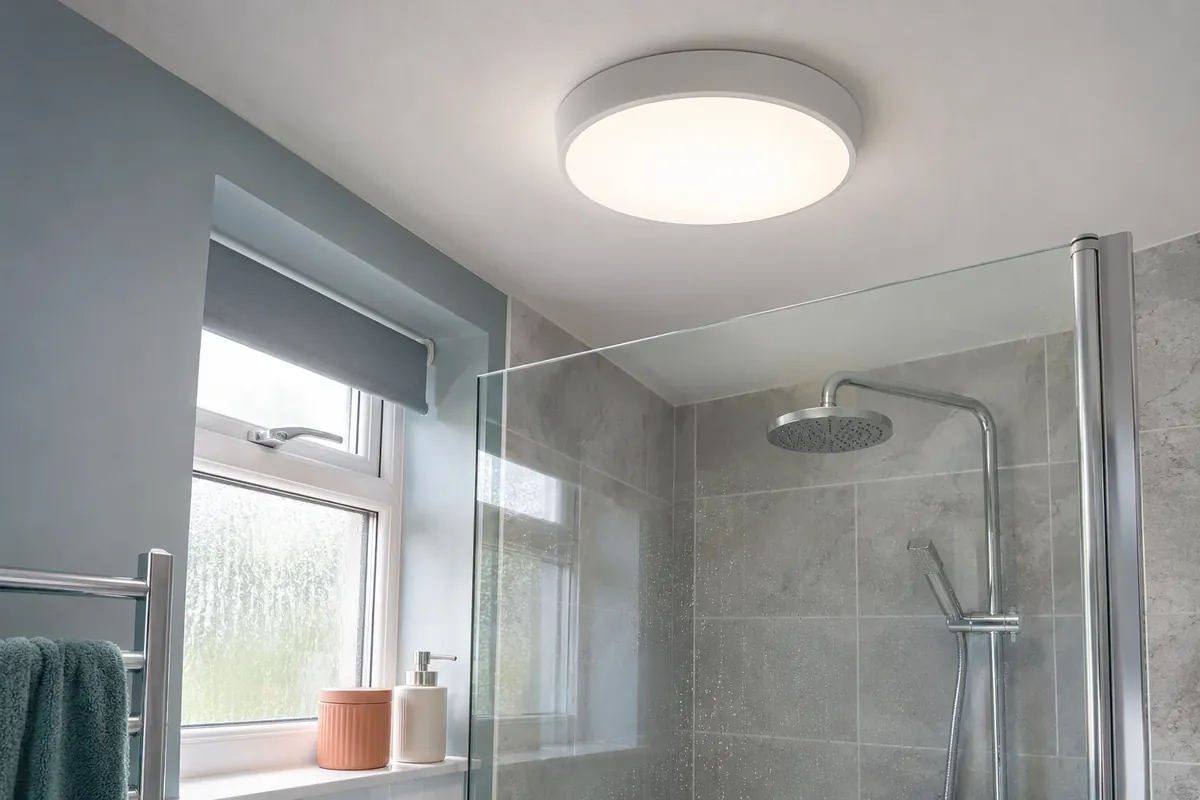
The zones in plain terms
Most guides describe the zones like this. The exact boundaries depend on your room, so an electrician should confirm them.
| Zone | Where it is | Common minimum |
|---|---|---|
| Zone 0 | Inside the bath or shower tray | IPX7, and low-voltage only |
| Zone 1 | Above the bath or shower, up to 2.25 m high | IPX4, and IP65 often advised |
| Zone 2 | About 0.6 m beyond zone 1, including around the basin | IPX4 |
| Outside the zones | The rest of the room | Check with your electrician |
What an IP rating means
IP stands for ingress protection. The first digit shows protection against solid objects such as dust. The second digit shows protection against water. In bathrooms, the second digit matters most. A rating written IPX4 means no tested figure for dust and a water rating of 4, which covers splashes from any direction.
A rating of 5 covers water jets, and a rating of 7 covers short immersion. The higher the number, the better the fitting copes with water. Always check the rating on the box and the product page, and keep the paperwork.
- IPX4: protected against splashing water.
- IPX5: protected against water jets.
- IPX7: protected against being dipped in water for a short time.
- The first digit, when shown, is for dust and solid objects.
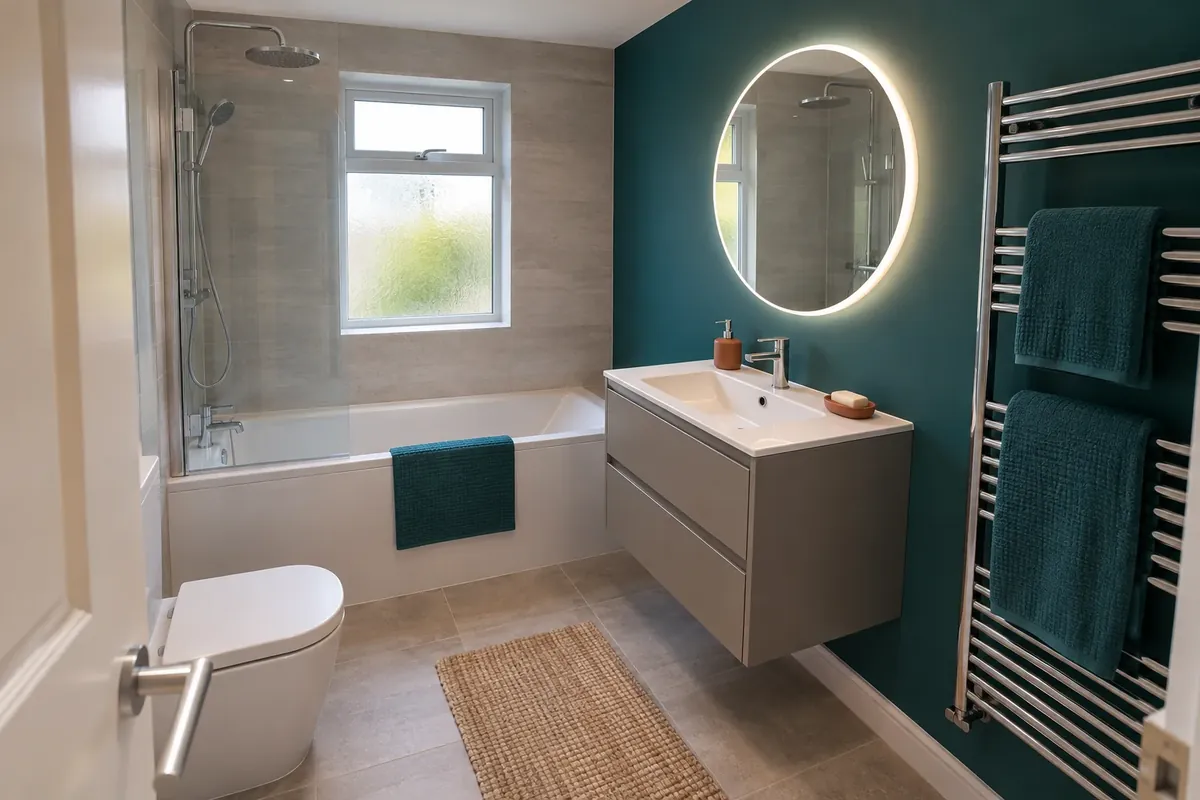
Choosing lights for each zone
A sealed light in the ceiling above the shower should have a rating suited to zone 1, and many people choose a higher rating for peace of mind. Over the basin and the rest of the room, IP44 fittings are normal. A fitting in zone 0 needs to be safe to sit under water and run on very low voltage.
A mirror light on the wall is best treated as zone 2. Ask for a fitting with a stated IP rating. Never fit an ordinary bedroom light in a bathroom. Many people also like several light sources. A bright central light, soft lights by the mirror and a dim night light can all be fitted safely if they have the right rating.
Switches, sockets and fans
Pull cords are the safe choice for switches inside a bathroom, or switches can be placed outside the room. Standard sockets are not allowed inside the zones. A shaver socket with an isolating transformer is the usual exception, and it sits away from zones 0 and 1.
Extractor fans need the right rating too, and a fan above a shower should suit zone 1. Heated towel rails should be wired by an electrician, and electric rails need the right protection. Underfloor heating must also be installed to the rules and protected by a residual current device (RCD) of 30 milliamps.
Why an electrician should do it
Bathroom wiring includes the lights, the fan, the shower, the heater and the supply. A mistake can be dangerous, and a certificate shows that the work meets the rules. Ask for the certificate at handover, and keep it with your house papers.
Some bathroom work needs a building warrant in Scotland, and electrical certification can be part of it. Ask your council or your fitter whether your job needs one.
In an older house in Aberdeen or Edinburgh, the wiring may be decades old. It is wise to have it checked before you add new lights.
Making a bathroom look good as well as safe
Safe lighting can still look good. Warm white lights at around 2700 to 3000 kelvin make skin tones look natural, and cool lights suit a cleaning light. A dimmer rated for bathroom use helps you change the mood.
Fitted bathrooms start from £3,995, and the final figure depends on your room, the fittings you choose and any extra work. When you get in touch, tell us where you would like lights and whether you want a fan or a heated rail.
Common questions
What IP rating do I need for a bathroom light?
Over a bath or shower, it is usually at least IPX4, with IP65 often advised in the shower area. Inside the tray, the light must be IPX7. Ask your electrician to confirm the zones in your room.
Can I fit a bathroom light myself?
Bathroom wiring must follow the wiring rules, so a qualified electrician should do and certify it. A mistake can cause a shock or a fire.
Can I have a socket in a bathroom?
Ordinary sockets are not allowed in the zones. A shaver socket with an isolating transformer is the usual exception, placed outside the wettest zones.
Are LED lights safe in bathrooms?
LED lights are fine if they have the right IP rating for the zone. Check the rating on the box, not just the type of bulb.
Bathroom fitters near you
We fit bathrooms in these towns. Pick yours to see what we do locally.