
Electric Shower or Mixer Shower: What Suits Your Boiler and Water Pressure?
Before you choose a shower, find out what your hot water system is and how strong the water pressure is. They decide which shower works well in your home. This guide explains electric and mixer showers in plain terms and what to check before you buy.
How the two types work
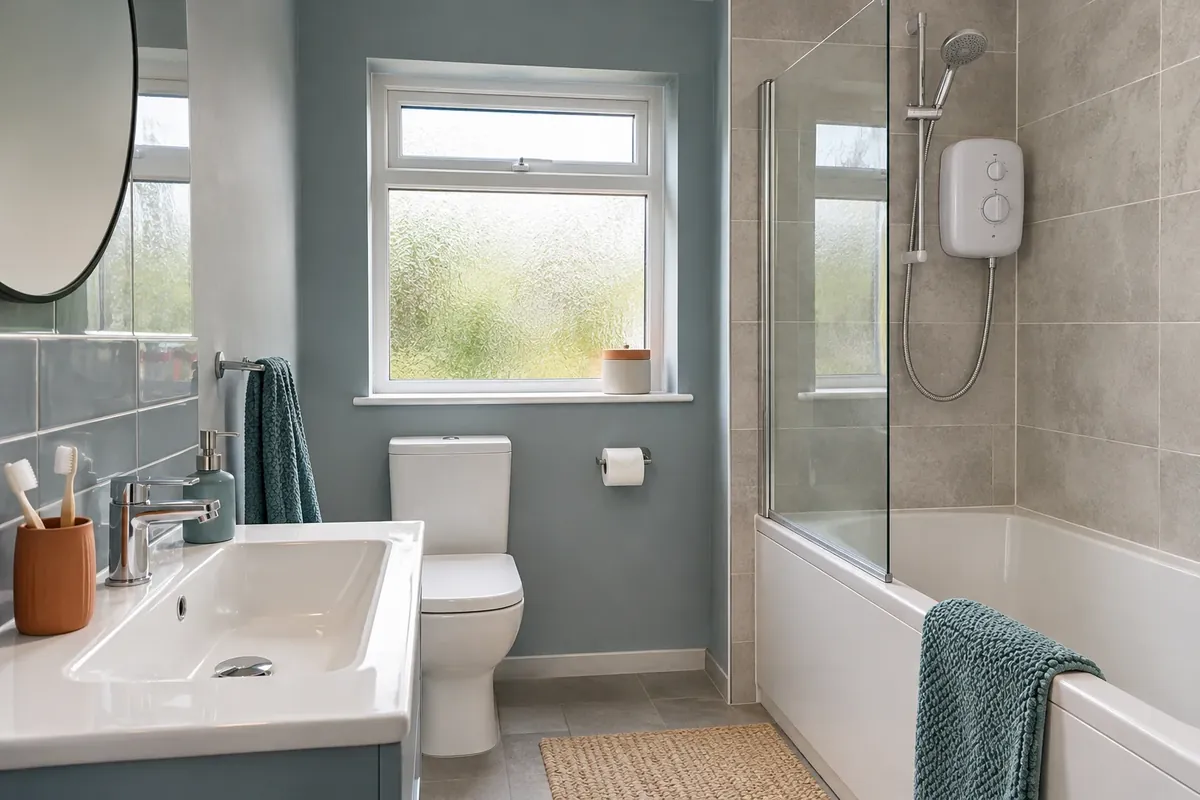
An electric shower takes cold water from the mains and heats it inside the unit. It does not use hot water from your boiler or cylinder. A mixer shower takes hot and cold from the house supply and blends them at the valve, so it needs a good supply of both.
This is the main difference. An electric shower makes its own hot water, so it works even if your boiler is off. A mixer shower relies on your boiler or cylinder to deliver hot water at a steady rate. Our shower rooms page shows how both can look in a finished room.
Work out what hot water system you have
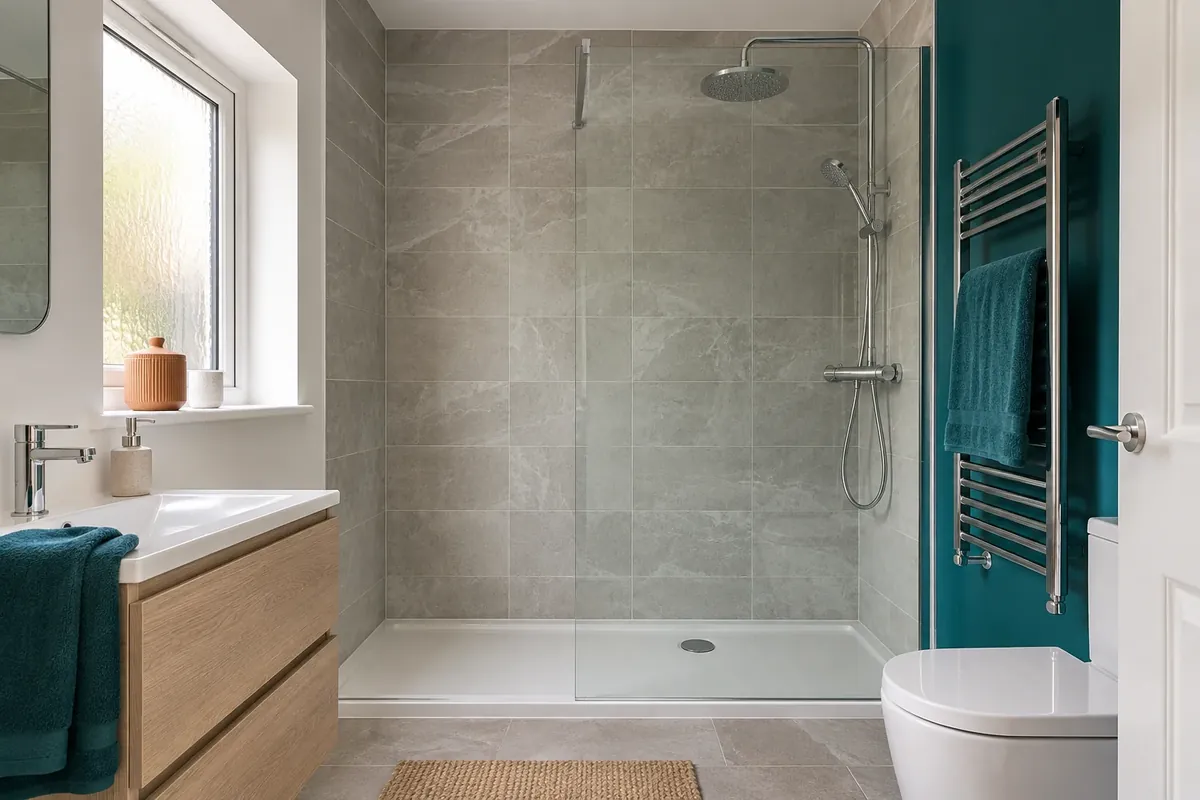
There are three common systems in Scottish homes. A combi boiler heats water as you use it and has no tank. A system boiler or a regular boiler heats water in a tank, called a cylinder. An immersion heater in a cylinder heats water with electricity.
If you are not sure, look in your airing cupboard. A tank means a cylinder, and no tank usually means a combi. A plumber or a heating engineer can tell you for certain.
Which shower suits which system
This table is a general guide. The exact figures for pressure and flow come from the shower maker, so check the manual of any model you like.
| Your system | Electric shower | Mixer shower |
|---|---|---|
| Combi boiler | Works, as it needs only cold mains water | Works if the mains pressure and flow are good |
| Cylinder with a tank | Works | Works, and a pump can boost a weak flow |
| Immersion heater only | Works | Works, but hot water can run out |
| Low mains pressure | Check the model, as many need a minimum pressure | Pump needed on a tank system |
Water pressure and flow
Pressure is how hard the water pushes. Flow is how much comes out. A shower needs enough of both. Most electric showers state a minimum mains pressure in the instructions, and a mixer on a combi needs a good flow of mains water, so check the manual of any shower before you buy.
You can test your flow with a bucket and a timer. Run the cold tap and see how long it takes to fill a bucket of a known size, like 10 litres. Compare that to the shower maker's minimum. A plumber can also measure pressure with a gauge.
Do not add a pump to a combi boiler's mains supply. Water rules limit pumps that draw straight from the mains, and a standard shower pump is made for tank systems. If your flow is weak, ask a plumber about the right fix.
Cost to run and live with
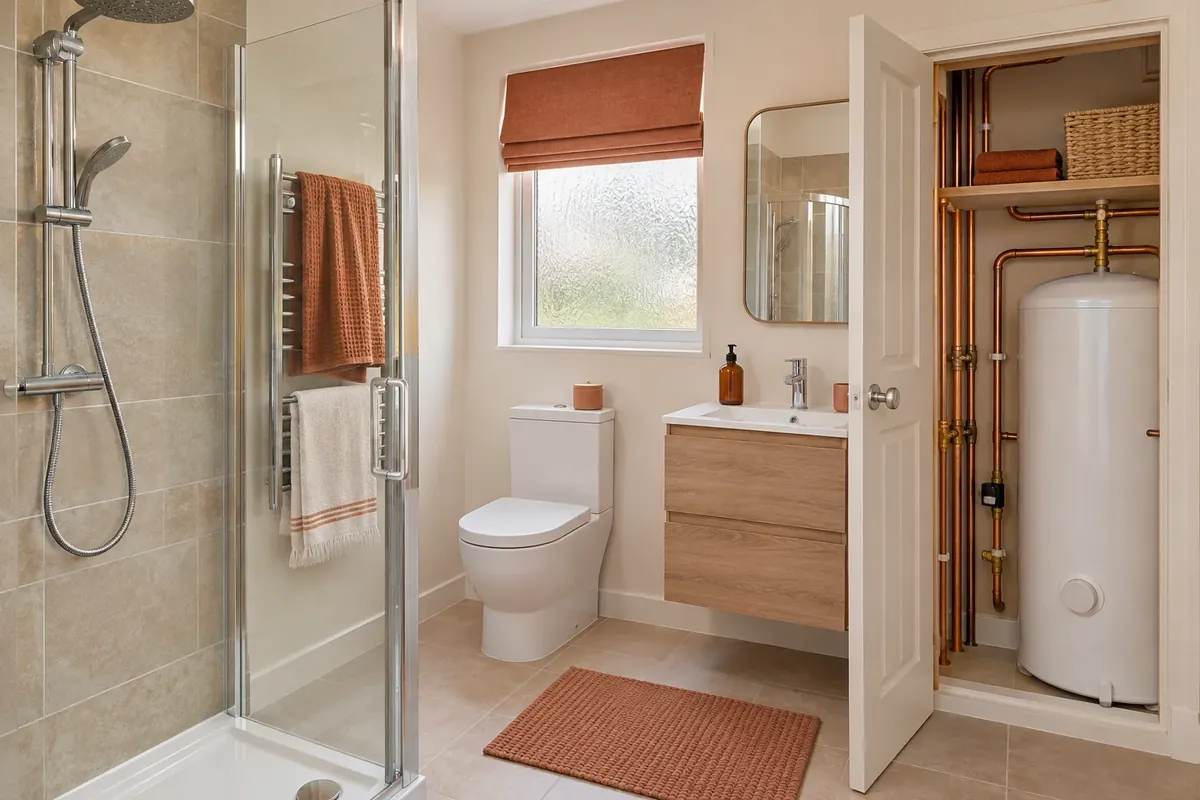
An electric shower heats only the water you use, which suits a home with one bathroom and a guest shower. It also tends to give a steady temperature, though the flow may drop in winter when the mains water is colder.
A mixer shower gives a stronger, more luxurious feel if your system supports it, and you can choose from rain heads and handsets. It will use hot water from your boiler or tank. In a house with many people, a tank may run out after a few showers in a row.
Both types last years if you look after them. In hard water areas, descale shower heads often. Electric showers also need a safe electrical supply, so a qualified electrician fits them.
Safety and fitting
An electric shower is a high-power appliance on its own circuit, with a cable, a switch and protection against electric shock. Work like this must follow the wiring rules in BS 7671, and in Scotland it falls under the building standards. A qualified electrician should fit and certify it.
A mixer shower needs a plumber who knows the water rules. Thermostatic models keep the temperature steady, which protects children and older people from scalding. Ask for a thermostatic valve in any home where that matters.
If you live in an older house in Aberdeen or Perth, the pipes can be old and the pressure uneven. A plumber can check them before you spend money on a shower.
How to decide
Ask three questions. What heating system do you have? How strong is the flow? How many people use the shower each morning? A combi boiler with good mains pressure suits a mixer or an electric shower. A tank system with a weak flow suits a pumped mixer or an electric shower.
Fitted bathrooms start from £3,995, and the final figure depends on your room, the shower you choose and any extra work. When you get in touch, tell us what boiler or cylinder you have if you know.
Common questions
Does a power shower work with a combi boiler?
Generally no. Power showers have a pump made for tank-fed systems. A mixer or an electric shower is the usual choice with a combi boiler.
Which costs less, an electric shower or a mixer?
It depends on the model, the electrical work and the pipes. Electric showers need their own circuit. Mixers need good pipework. Ask for both options in writing.
How do I know my water pressure?
A plumber can measure it with a gauge on an outside tap. A simple bucket test can also show your flow, though it does not replace a measured figure.
Do I need an electrician for an electric shower?
Yes. It needs a dedicated circuit with protection, and a qualified electrician should fit it and sign it off.
Bathroom fitters near you
We fit bathrooms in these towns. Pick yours to see what we do locally.