
Bathroom Flooring: LVT, Tiles or Vinyl?
The floor takes more punishment than any other surface in a bathroom, with wet feet, spills and steam every day. This guide compares luxury vinyl tiles, ceramic or porcelain tiles and sheet vinyl, and shows what to check before you choose.
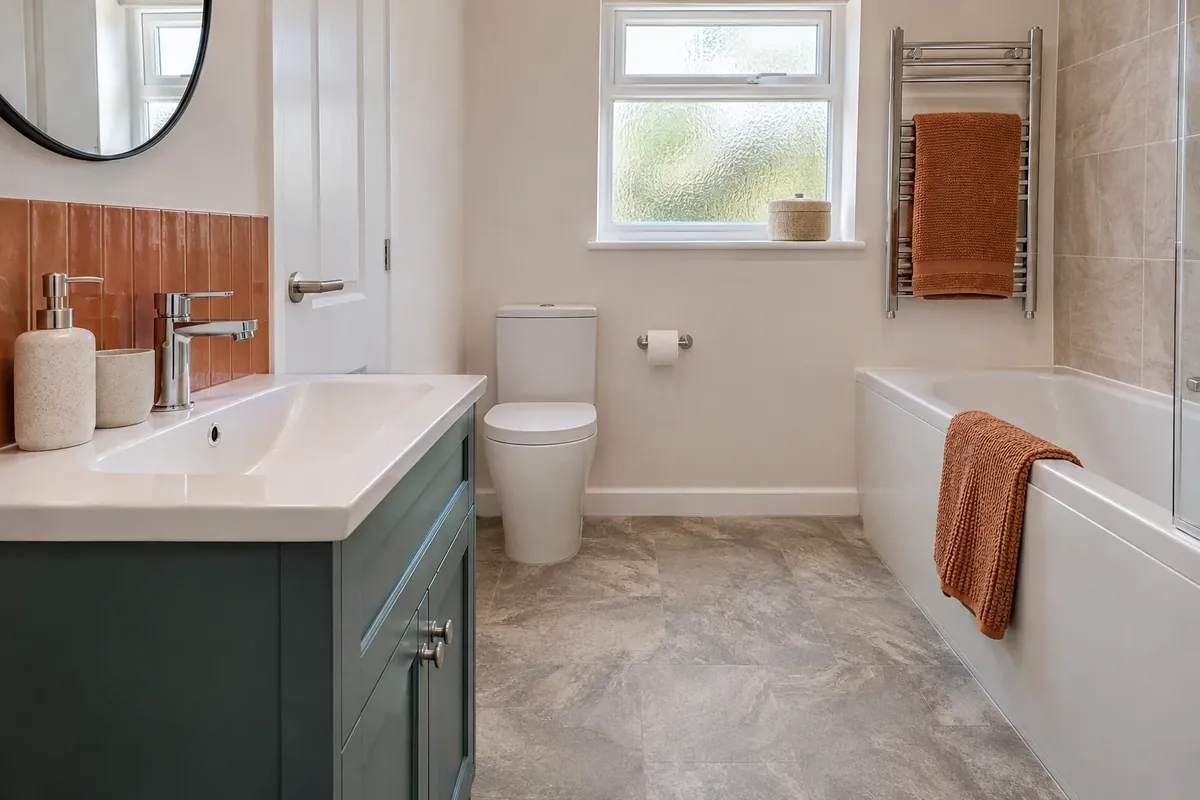
What a bathroom floor has to do
A bathroom floor must resist water, grip when wet, feel comfortable and clean easily. It also has to work with the layout, from the shower to the door. In a full refit, the floor is chosen alongside the walls so that colours and finishes match. Our bathroom renovations page shows how floors fit into a complete refit.
There are three main choices. Each has strengths, and the best one depends on your room, your budget and how you live.
Luxury vinyl tiles (LVT)
LVT comes as planks or tiles that look like wood or stone. Most are waterproof, and a rigid-core type with a solid centre holds up well in wet rooms. LVT feels warmer and quieter underfoot than ceramic, and it is softer on a dropped bottle.
It is quick to fit, because it clicks together or is stuck down to a flat floor. The floor beneath must be smooth and dry, since bumps show through. Check the maker's guidance on wet areas and underfloor heating before you choose.
- Warm underfoot and quiet to walk on.
- Wood and stone looks without the weight.
- Needs a flat, dry floor underneath.
- Can be marked by sharp furniture feet or heavy knocks.
Ceramic and porcelain tiles
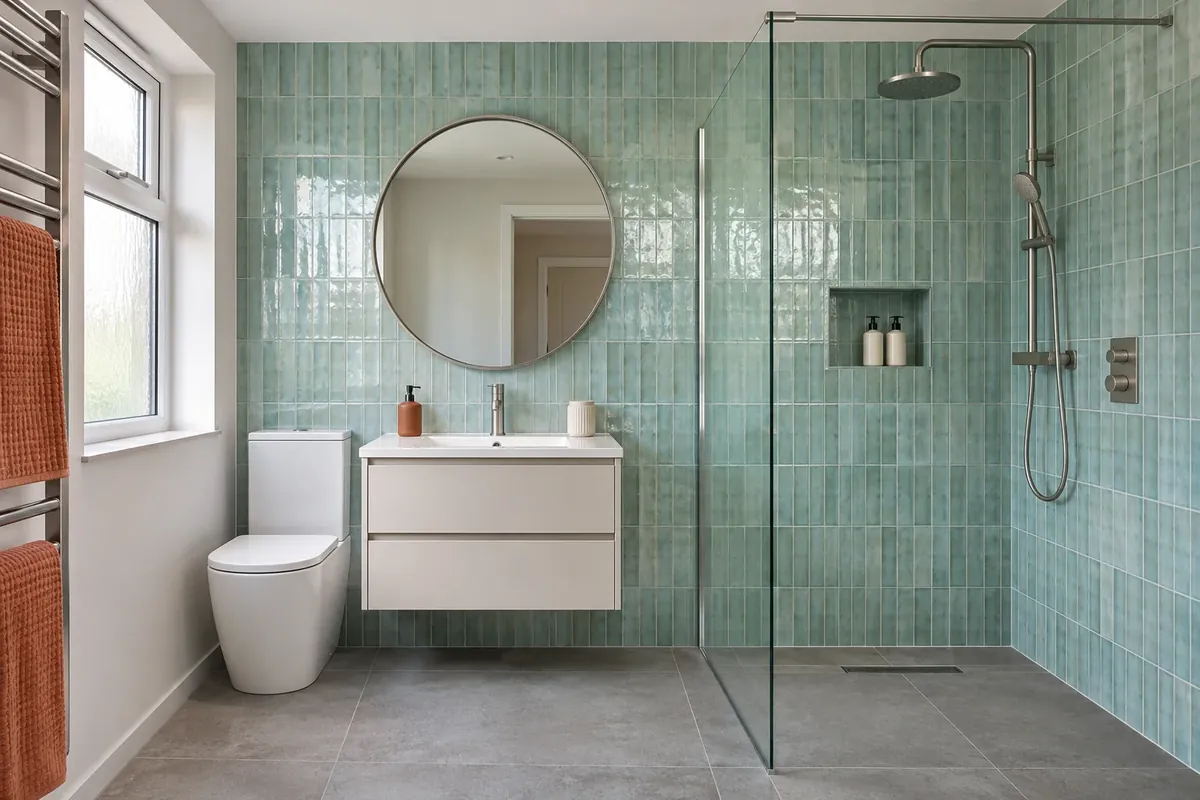
Tiles are the traditional bathroom floor, and porcelain is dense and hard-wearing. They resist water well and work with underfloor heating, since they hold and spread warmth. Large format tiles with fewer grout lines look neat and are easier to keep clean.
The downsides are cold underfoot without heating and slippery surfaces if you pick a polished finish. Choose a matt or textured tile for a bathroom, and ask for the slip rating. Grout needs sealing and cleaning, and tiling takes longer than laying vinyl.
Tiles also add weight and height. An older timber floor may need extra boards so it does not flex, and the new floor level can be higher at the door.
Sheet vinyl
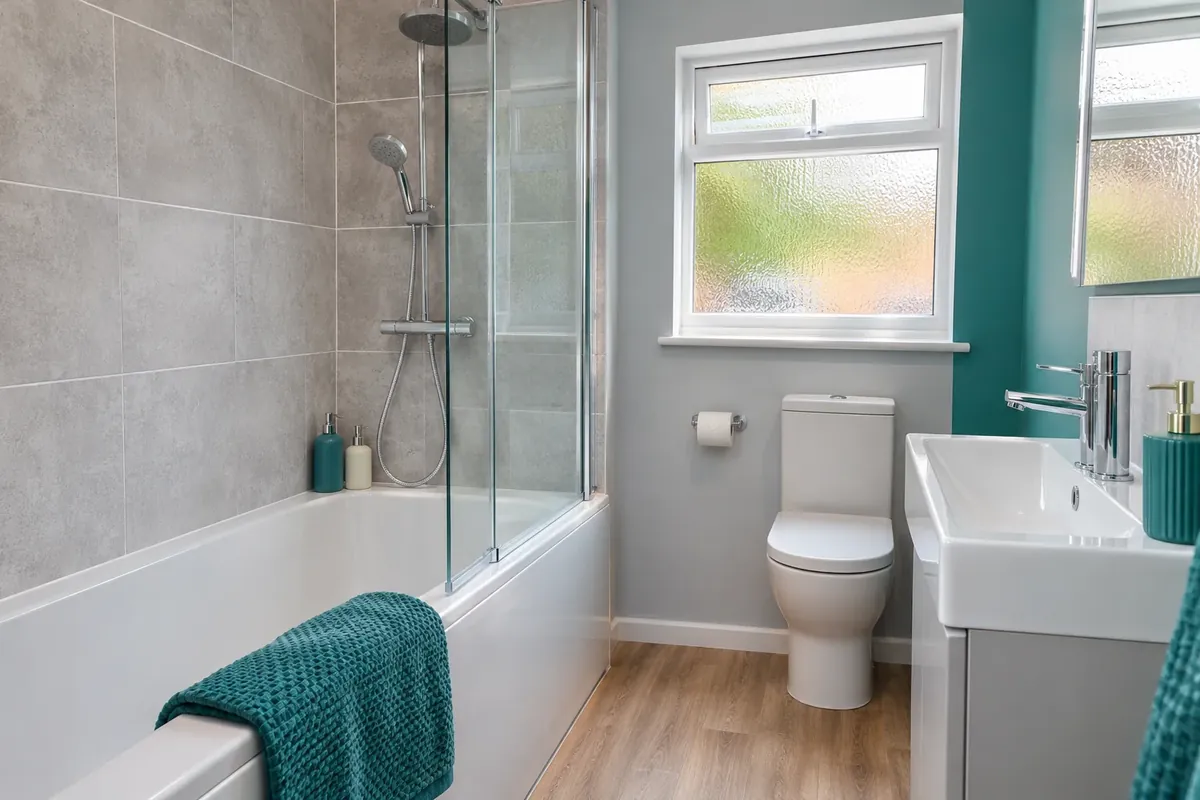
Sheet vinyl comes in a roll and is cut to the room, so there are few or no joins. That makes it a very good barrier against water, and it is usually the lowest cost of the three. It is soft and warm underfoot too.
The look has improved a lot. Modern sheet vinyl copies stone and wood well. It can dent under heavy objects and can be cut by sharp edges. A fitter must lay it on a smooth base and seal the edges around the bath and toilet.
Comparing the options
This table gives a quick comparison, based on common trade guidance. Check each product's own specification, because ranges vary.
| LVT | Porcelain tiles | Sheet vinyl | |
|---|---|---|---|
| Water resistance | Very good (rigid core best) | Very good | Very good with few joins |
| Feel underfoot | Warm and quiet | Cold without heating | Warm and soft |
| Grip when wet | Check the rating | Choose matt or textured | Check the rating |
| Underfloor heating | Check the maker's limit | Works well | Check the maker's limit |
| Typical cost level | Middle | Higher with labour | Lowest of the three |
Grip, safety and upkeep
Wet feet and slippery floors do not mix. Look for a slip-resistance rating on any floor you buy, and choose a matt finish over a gloss one. A rating such as R10 is often quoted as a good starting point for a domestic bathroom, so ask the supplier what your floor achieves.
Upkeep is simple. Wipe up puddles, avoid harsh abrasives and keep the sealant around the bath fresh. In tile floors, reseal the grout from time to time. Vinyl needs no grout, which saves effort.
Which floor suits your home
For a warm, quiet floor with a wood or stone look, choose LVT. For a hard, long-lasting floor with underfloor heating, porcelain is hard to beat. For the lowest cost and few joins, sheet vinyl is practical.
The room matters as much as the material. In a tenement in Glasgow or Edinburgh, the floor is often timber boards over joists, and a rigid tile may need a stiffer base. A newer home in Livingston often has a flat concrete or chipboard floor that suits any of the three.
Fitted bathrooms start from £3,995, and the final figure depends on your room and choices. Tell us your floor type and any underfloor heating when you get in touch.
Common questions
Is LVT really waterproof in a bathroom?
Many LVT products are waterproof on top, but water can get in at joins and edges. Rigid-core types and well-sealed edges are the safest choice. Check the maker's wet-area guidance.
Can I put tiles over an old timber floor?
Sometimes, but the floor must be stiff enough, or the tiles and grout can crack. It is common to add extra boards or a tile backer board first.
What is the warmest bathroom floor?
Vinyl and LVT feel warm on their own. Porcelain feels cold on its own, but it works very well with underfloor heating.
Does the floor go under the bath and vanity?
It depends. Many fitters lay the floor around fixed units. Ask in advance so you know what happens if you change the layout later.
Bathroom fitters near you
We fit bathrooms in these towns. Pick yours to see what we do locally.